May 25, June 15, 2018- Submission of full papers for review
Aug. 27, Sept. 3, 2018- Notification of acceptance
Oct. 5, October 19, 2018- Submission of final papers
Oct. 5, October 19, 2018- Registration and Payment of participation fees
Oct.15, October 26, 2018- Availability of the Preliminary conference program
- November 12-14, 2018
- Conference date
Keynote lecturers
Keynote 1
Power electronics - quo vadis
Dr.sc.ing.Frede Blaabjerg
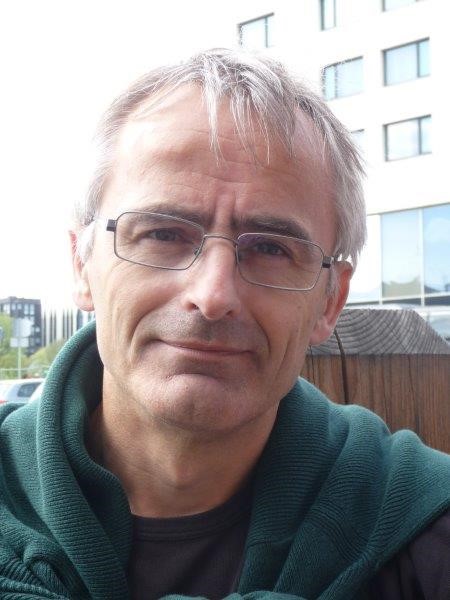
Frede Blaabjerg (S’86–M’88–SM’97–F’03) was with ABB-Scandia, Randers, Denmark, from 1987 to 1988. From 1988 to 1992, he got the PhD degree in Electrical Engineering at Aalborg University in 1995. He became an Assistant Professor in 1992, an Associate Professor in 1996, and a Full Professor of power electronics and drives in 1998. From 2017 he became a Villum Investigator. He is honoris causa at University Politehnica Timisoara (UPT), Romania and Tallinn University of Technology (TTU) in Estonia.
His current research interests include power electronics and its applications such as in wind turbines, PV systems, reliability, harmonics and adjustable speed drives. He has published more than 500 journal papers in the fields of power electronics and its applications. He is the co-author of two monographs and editor of 7 books in power electronics and its applications.
He has received 26 IEEE Prize Paper Awards, the IEEE PELS Distinguished Service Award in 2009, the EPE-PEMC Council Award in 2010, the IEEE William E. Newell Power Electronics Award 2014 and the Villum Kann Rasmussen Research Award 2014. He was the Editor-in-Chief of the IEEE TRANSACTIONS ON POWER ELECTRONICS from 2006 to 2012. He has been Distinguished Lecturer for the IEEE Power Electronics Society from 2005 to 2007 and for the IEEE Industry Applications Society from 2010 to 2011 as well as 2017 to 2018. In 2018 he is President Elect of IEEE Power Electronics Society.
He is nominated in 2014, 2015, 2016 and 2017 by Thomson Reuters to be between the most 250 cited researchers in Engineering in the world.
Power electronics - quo vadis
The world is becoming more and more electrified combined with that the consumption is steadily increasing – at the same time there is a large transition of power generation from fossil fuel to renewable energy based which all together challenges the modern power system but also gives many opportunities. We see also now big steps being taken to electrify the transportation – both better environment as well as higher efficiency are driving factors. One of the most important technologies to move this forward is the power electronics technology which has been emerging for decades and still challenges are seen in the technology and the applications it is used. This presentation will be a little forward looking (Quo Vadis) in some exciting research areas in order further to improve the technology and the systems it is used in. Following main topics will be discussed
The evolution of power devices
Renewable Generation
Reliability in power electronics
Power Electronic based Power System stability
At last some discussions about other hot topics will be given.
Keynote 2
Advanced Thermal Management in Electronic Packaging
Dr.sc.ing.Donatas Mishkinis
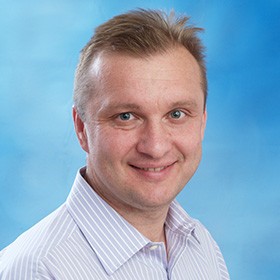
Engineering Manager and Principal Designer with vast, more than 25 years of experience in developing innovative, customer- oriented products, systems and solutions for electronics thermal management applications.
Professional experience obtained from working in different R&D organizations and environments: academic research institute (Luikov Heat & Mass Transfer, Belarus, 9 yrs.), higher educational establishment (Clemson University, USA, 2 yrs.), government research laboratory (Canadian Space Agency, Canada, 3 yrs.), industry (IberEspacio, Spain, 10 yrs. and Allatherm, Latvia, 2 yrs.).
PhD in thermal engineering with dissertation dedicated to heat pipe applications in natural gas adsorption storage systems and heat pumps.
Winner of HISPASAT 25th Anniversary Prize: Best Telecommunications Satellite Innovation Project.
Holder of George Grover Award in recognition of outstanding contribution to the development of science and technology of heat pipes.
Author of 12 patents and more than 100 scientific papers and chapters in books.
Advanced Thermal Management in Electronic Packaging
Modern trends in electronic packaging and integration lead to extremally high power density designs. Thermal management is getting critical issue for further development of micro- and power electronic industries. Undeniably, that novel innovative approaches: advanced heat transfer materials and processes are necessary to answer the thermal challenges. Today, along with new electronic packaging developments, the role of thermal management is a key issue to assure effective package design.
Metallic heat sinks and straps, liquid cooled cold plates (including microchannels designs), thermal electric coolers (Peltier elements) heat pipes and vapor chambers are widely used for thermal control in nowadays electronics, but these technologies are reaching the limit and cannot provide the solutions for future levels of powers, power densities, integration and miniaturization needs.
Heat Loops known as Loop Heat Pipes, Capillary Pumped Loops, Mechanically Driven Loops, Two-phase Loops, Hybrid Loops, etc., are the next generation of thermal management systems. As well as in Heat Pipes, the evaporation/condensation closed cycle also being used in Heat Loops as highly efficient heat transfer mechanism.
The main advantages of the Heat Loops are (1) capability to manage high power densities due to special design of the evaporator and (2) great flexibility in integration to electronic package due to the fine diameters of fluid transport lines. In addition, Heat Loops can efficiently transfer power against gravity, which is not the case for traditional Heat Pipes.
A trade-off and an overview of electronic cooling technologies. Trends, potential and current applications of the technology in different industries for electronics cooling are reviewed.
www.conference.rtu.lv
Technically sponsored by: